Real Estate QuickBooks CleanupOne closing is four jobs

Steven Palmieri, a Tax CFO and the Entrepreneur's CFO, splits a closing deposit into the fee, the agent share, and the cash that was never income.

The practice is in Dallas. Owners anywhere join by video, with the file shared and the close on a set day each month.

Name the closing
An owner on a phone call at a table

Name the closing that will not split.

Steven Palmieri, Tax CFO

You will be talking to the Steven Palmieri practice.

The Tax CFO way, after one wire has to be decided.

A bookkeeper splits the deposit after the fact. The Tax CFO sets the file up so the next closing splits itself, and then decides what the year should carry, which doors you keep, which loan you refinance, and what the margin on brokerage income looks like before the return. The split is the floor. The decision is the work.

Book the hour

Six ways a deposit gets misread

Open the row that matches the money you do not trust.

  1. 1The bank shows one amount and the file calls all of it income

    We split that amount before it is called earned.

    The fee can be income. The agent share is what you owe. Earnest money is still someone else's until the deal is done.

  2. 2Earnest money is sitting in the operating bank while the contract is alive

    We move the hold back beside a matching amount you still owe.

    An open contract is not a fee. The cash stays trust money until a release or a closing says otherwise.

  3. 3A check went out and no agent name is saved on it

    We flag the payment so January is not a stack of copies.

    The amount you paid still has to be findable by person. A net deposit with no name loses that story.

  4. 4A tenant deposit landed in the same account as rent already earned

    We give the deposit its own channel.

    Rent you have earned and cash you are holding are different jobs. Mixing them makes the month look richer than it is.

  5. 5A platform payout for a long weekend was booked as ordinary rent

    We count the nights before we name the income.

    A few nights and a year's lease are different income. The deposit line will not say which one arrived.

  6. 6The purchase price was never split between the building and the land

    We separate the part that can be written off from the part that cannot.

    Land just sits. A residential building is written off in a straight line over 27.5 years. One blended number hides both.

Open the closing

From Steven Palmieri.

Steven Palmieri, Tax CFO

The Entrepreneur's CFO.

We keep the books and the return in one practice. The month can close once the deposit finally splits.

Send one closing you would not explain from memory.

A chart with the names covered is enough. The form asks for a closing, not for a price.

Steven Palmieri, Tax CFO

You will be talking to the Steven Palmieri practice.

A deposit is not a story until it splits.

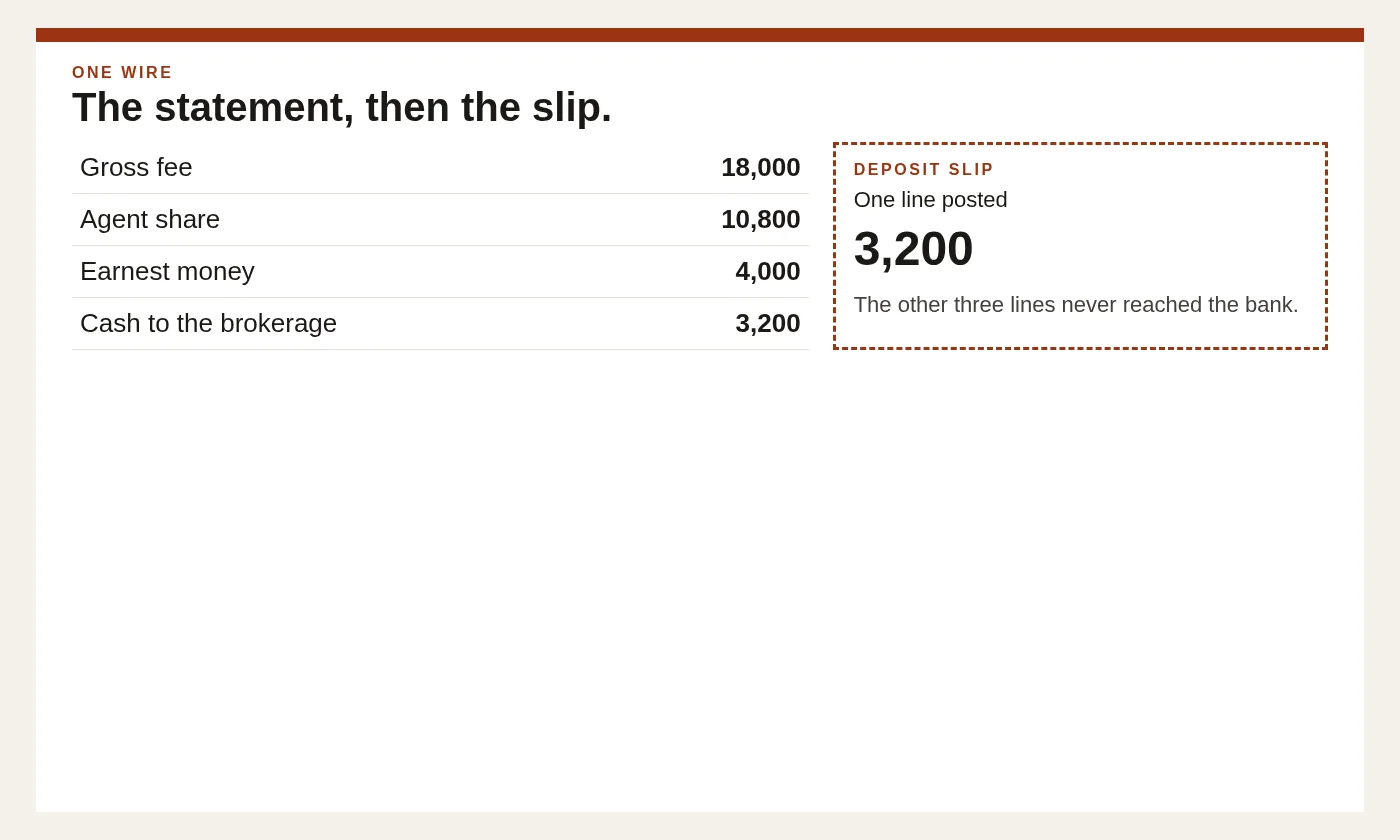
QuickBooks will take the whole wire as income. The closing still did four jobs, and earnest money that passed through was cash you were holding.

The four jobs inside one deposit.

Record only the net that hit the operating bank and two things go quiet. Brokerage income is low. The amount you paid the agent is no longer sitting where January can find it. The year-end forms are that same split, saved on purpose. A check with no name on it is the one that hurts later.

Start with the gross fee. That is the income, if you have earned it. The agent's split is what you owe, and then what you pay. A referral or a co-broke is its own payable, not a reduction you only remember on a sticky note. If the check was recorded net, that is the finding. It is not a verdict about how busy the month was.

Earnest money is the job that should scare a clean profit and loss. While the deal is open, that cash is not the brokerage's. It sits with the trust cash and a matching amount you still owe, deal by deal. It does not go on the profit and loss. It becomes a fee only for the portion you have actually earned, and only when you have earned it. A file that runs earnest money through income looks profitable on deals that have not closed, and looks strangely poor when the money goes back to a buyer.

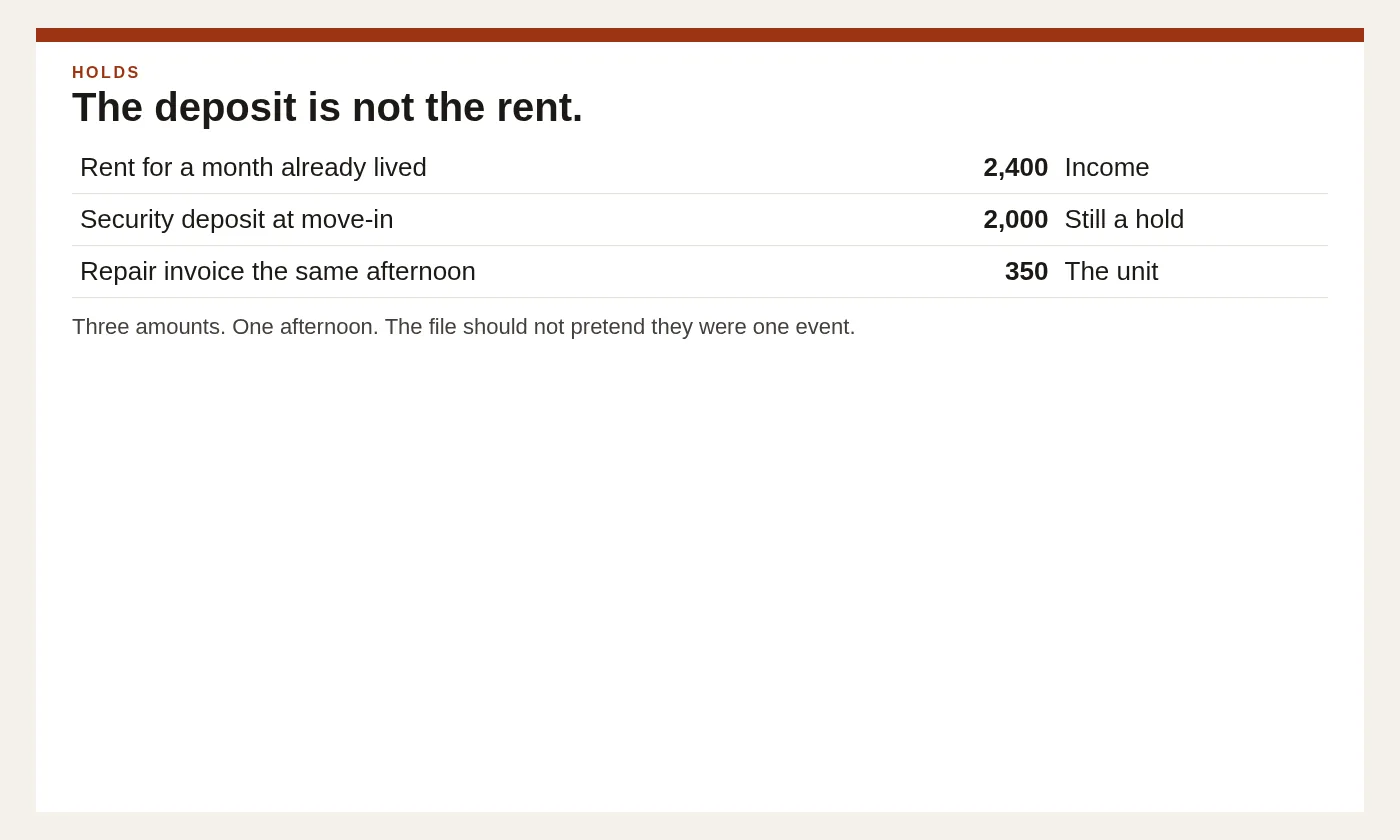
The same split shows up when you manage houses as well as close them. Rent you have earned is income. A security deposit is still the tenant's, held until the lease says otherwise. Paying the operating bills from the account that holds those deposits is how a month starts to lie. We want the two banks named, even when they live at the same institution.

What we need for the first look.

Send one closing you do not trust, the deposit or the commission check, the split sheet, and the trust statement if earnest money sat with the brokerage. The first pass takes that single closing apart. Gross fee. Agent paid. Referral paid. Anything in the deposit that was never a fee. You should be able to point at each part. Leave property addresses and party names out of the note on this site.

If you also hold rent, add the month's deposit report and say which account the tenant money landed in. We are not asking for a software tour. We are asking which amount will not tie. A person reads that note. The reply starts from the chart you described.

After the file is trustworthy, the useful thing is a monthly rhythm. Trust activity gets a monthly accounting when the account moved. The operating bank gets a reconciliation you can hand to a lender without rebuilding the story. You can keep that rhythm, or we can keep it with you. There is no lock that forces the second choice.

Cash you are holding is not a fee.

Earnest money, rent you have not yet earned, a security deposit, and other cash held for someone else are not brokerage income. The broker keeps that cash in an account named for the hold, or delivers it to an escrow agent the parties agreed to use. A sales agent does not keep a private pile of that cash. Money the agent receives goes to the sponsoring broker. The contract can name a different clock. When it does not, the state page is where that clock is written, and this page only says the cash is still a hold.

If the hold account moved, the month should show where it went. The papers stay with the year they belong to, because a later return can still ask for them. When a contract dies, the cash stays a hold until the release is signed. None of that is a click-path in the software. It is the reason the operating bank and the hold bank are not the same story.

We do not hold the earnest money for you, and we do not pretend a web page is the brokerage's trust ledger. We set the file so the ledger you already keep can be seen beside the bank. The federal estimates still fall on 15 April, 15 June, 15 September, and 15 January for an individual, and a corporation uses the 15th of the 4th, 6th, 9th, and 12th months. An individual estimates with Form 1040-ES, and a corporation estimates with Form 1120-W. A cleanup that calls a hold income will feed those worksheets the wrong profit.

A busy week does not name the income.

A full week in a destination city can stuff the payout, and the bank still will not say what the nights were. A platform check that arrives because the town is packed can be a short stay, lodging tax and all, or it can be a lease that happened to renew that week. The crowd does not decide. The nights do. We have watched that lump hide a cleaning fee, a guest stay, and a lease payment in one deposit, and the file has to take them back apart before anyone calls the month done.

Lodging tax on a short stay is a state and local question, and the rate belongs with the state that taxes the room. A stay that runs long enough to count as a resident stay can fall out of that tax when the notice rules are met. A local lodging tax is a separate call even when a platform already sent the state piece. Only the person required to file the report may take a timely-filing discount, and this page does not print the percent. We put the nights and the withheld lines where a later return can find them. We do not guess a savings number from a web page. Form 1099-MISC is where rents you pay in a trade or business get a name, and a contract worker is a different form. January is easier when the name was kept in the month the check left.