A class you will actually keep.
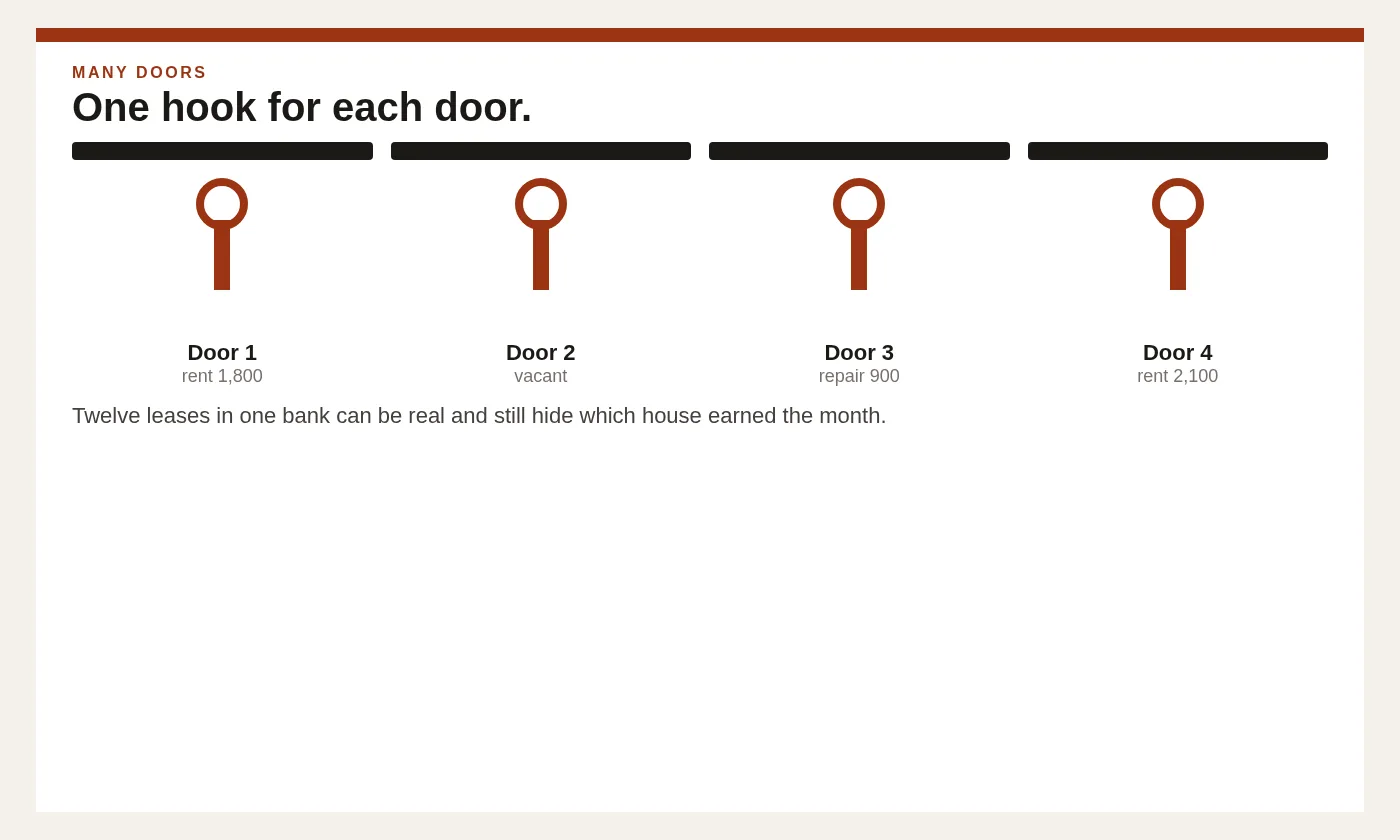
Per-property tracking is the unglamorous fix. Each door gets a class, a location, or its own set of accounts, whichever the file can actually keep up with. A system you will not maintain is not a system. We would rather have twelve classes you update than a perfect chart that dies in the second month.
Deposits treated as income distort that picture twice. The vacant house looks profitable in the month the deposit arrived, and looks wounded in the month you give it back. A repair posted as a new asset, or a new roof posted as a repair, moves the profit in a way that also moves a refinance conversation. We separate those on purpose, invoice by invoice, for the months in scope.
Painting a unit between tenants is not the same purchase as a roof with a long life. We ask which one the invoice was. We do not bury both in a single repairs bucket and hope the return sorts it out. The lender who asks about one door is asking for this class, not for a blended profit that flatters the portfolio.
Land just sits.
Residential rental buildings and their structural pieces are written off on a straight line over 27.5 years, mid-month. Land is not written off. A purchase that was dumped into one fixed-asset line has blended a number that never depreciates with a number that does. The cleanup splits them. We do not invent the percentage from a photograph of the yard. The contract, the appraisal, or the worksheet you already have is the source, and if you do not have one we say so instead of guessing.
A county notice of value is not that source by itself. Brokerage income is a different number. The notice belongs with the door it names. When doors sit in more than one county, each notice stays with its door. The rules for one state's appraisal districts are on the state page. This page is the split between land and building, and the class that lets you see the month.
There is also a line between a passive rental loss and the kind of participation that can change how a loss is used. A web page will not decide whether you clear that line. The file can keep the hours and the decisions. Form 8582 is where a passive loss is computed, and we do not invent a number the form has not computed.
After the doors are separated.
Send the purchase that was booked as one number, or the month where you cannot tell which door lost money. A rent roll with the names covered is enough. If short stays and leases share a building, say how you tell them apart today, even if the answer is that you cannot.
The work is a video call. The file is shared and the hour sits on the calendar. The close day does not change because the houses are somewhere else. After the doors are separated, the monthly job is small. Reconcile the bank. Post rent to the door that earned it. Leave deposits in the hold. Write the new roof to the asset and the patch to the repair.
That rhythm is what makes the next decision possible. Which doors you keep, which loan you refinance, and which building is only land you are carrying. The Tax CFO reads the class. A blended number cannot answer the question, no matter how confident the screen looks.