Real Estate QuickBooks CleanupThe side channel for money you are holding.
Rent for a month already lived is income. The deposit taken at move-in is not. When both land in one account, the profit looks stronger than the leases.
See the channel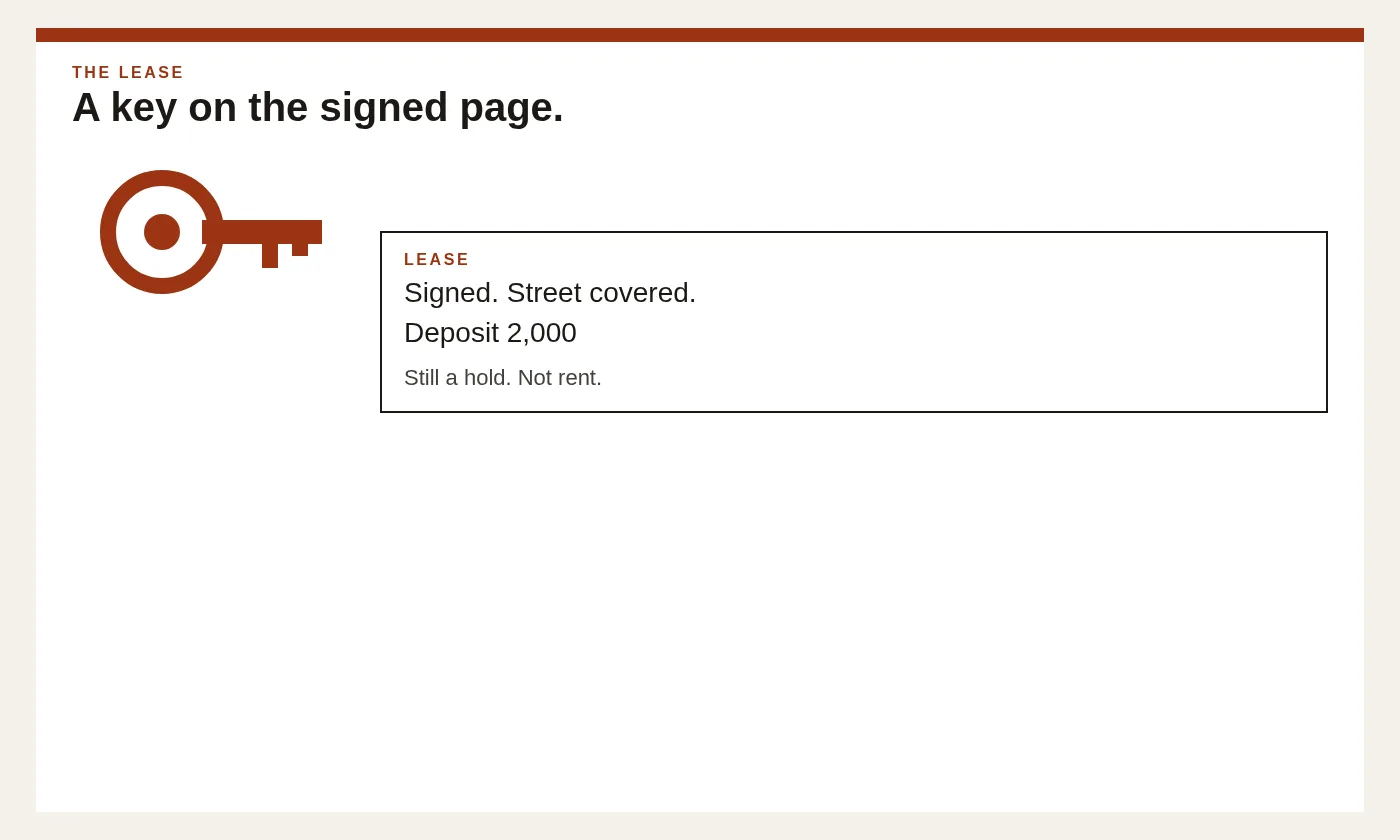
Rent for a month already lived is income. The deposit taken at move-in is not. When both land in one account, the profit looks stronger than the leases.
See the channelA hands-on owner can collect rent, take a new deposit, and pay a repair invoice before dinner. The file should show three events. Rent you have earned belongs on the profit. The deposit sits until the lease says it can be applied or returned. The repair belongs to the unit that needed it. Mixing the first two makes the month look rich, and the day you refund a deposit the profit falls for no operating reason at all.
We give the deposit its own account and, where you already keep one, its own bank. The monthly close then shows rent in one place and money you are still holding in another. A lender can see the difference. So can you, on the day a tenant moves and the paint bill arrives in the same stack of mail.
Security deposits you hold for an owner you manage are still that owner's hold, not your operating cash. If the account that keeps them moved during the month, the close should say where the cash went. We build the file so that story has a home. We do not replace your duty to report it to the owner.
If you also broker, earnest money is a second hold. An open contract is not a fee. The cash stays matched to an amount you still owe, deal by deal, and it does not go on the profit and loss. It becomes a fee only for the portion you have actually earned, and only when you have earned it. A file that runs earnest money through income looks profitable on deals that have not closed, and looks strangely poor when the money goes back to a buyer.
The account has to be identifiable as a trust account, or the cash has to sit with an escrow agent the parties named. Paying ordinary bills from that account is how a month starts to lie. If the contract dies, the cash stays a hold until the release is signed. We do not teach a click path for the release. We keep the balance visible the day before and the day after, so the profit never had it.
A clock for how fast that deposit must move is a state rule. The number of working days the broker is given is written on the state page. This page prints the accounting. The state page is where the day count for one state is written in full, including what happens to the papers after the contract ends.
Rent posted to the leases it belongs to. Deposits still sitting in the hold account, name by name, without becoming income. Repairs on the unit that needed them. A reconciliation that matches the operating bank without a plug number. If the office has employees, payroll is set up with a provider you then run. We do not run the pay.
Send the month that will not tie, and say whether the fight is a deposit, an earnest row, or a bill paid from the wrong account. We read that by video. The close day does not change because the property is far away. After the accounts are named, you can keep the rhythm yourself or keep us on the monthly close. Either way the deposit stops pretending to be rent.
A cleaned hold also changes the conversation about the year. Money you are holding is not margin. It should not talk you into a refinance, and it should not talk you out of one. The Tax CFO question is which doors the real profit can carry, once the holds are back in their channel.
Say whether the amount is a tenant deposit, earnest money, or both.

You will be talking to the Steven Palmieri practice.