Real Estate QuickBooks CleanupA week is not a year's lease.
A platform payout arrives looking like rent because a guest paid it. If the stay was a few nights, it may be lodging. If the same house is on a year's lease, it is rent.
Count the nights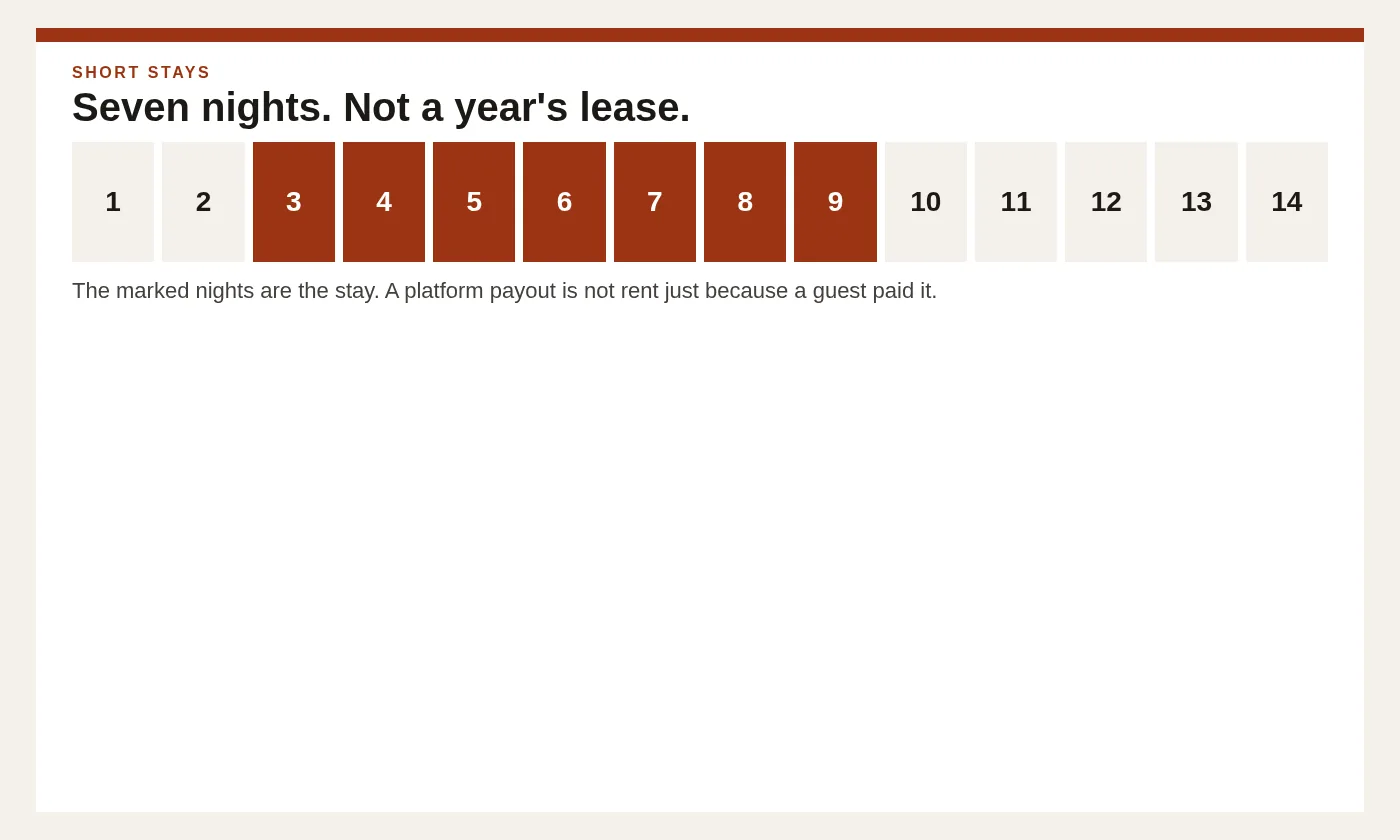
A platform payout arrives looking like rent because a guest paid it. If the stay was a few nights, it may be lodging. If the same house is on a year's lease, it is rent.
Count the nightsSomeone has to count them. A weekend, a holiday week, and a lease that renewed in the same month can share one building and one deposit. The file has to know which nights were which before the income gets a name. We do not stamp a property type because an app said rental. We count how the building was actually used.
A stay under thirty consecutive days is the usual line people argue about, and many states tax that stay as lodging once a small daily floor is met. A stay of thirty or more consecutive days can fall out of that tax when a written notice is done the way that state describes. We do not recite the notice here. We keep the nights so the question can be answered. The figures for one state, including the percent and the floor, live on the state page.
A payout that bundles three weekends and a cleaning fee is a lump. Guest money, the tax you still owe, and the amount that is truly yours are not one bucket. The size of the deposit is not the lesson. The unpacking is.
A platform that has agreed to collect the lodging tax must collect it and send it. If you rent on your own site, or on a platform that does not collect, you collect and you send. A local lodging tax is a separate call even when the platform already handled the state piece. Only the person required to file a report may take a timely-filing discount. The size of that timely-filing discount stays on the state page. A file that books the whole payout as rent will miss every one of those lines.
We do not file that report from a web page, and we do not guess a city rate without looking it up for that property when the work starts. A stale rate is worse than a blank. If the platform already withheld the state piece, say so. The amount that hit the bank is not the gross the guest paid, and the return needs both.
A short stay can also change how a loss is used. More than half the units used on a transient basis can make the building look like a hotel for depreciation, and that is a facts test. Active participation in a rental wants a real share and real decisions, such as approving tenants or repairs. A web page will not decide whether you clear that line. The file can keep the hours and the decisions so the person who prepares the return is not reconstructing them in March.
Send one payout you do not trust and the list of nights it covered. If a lease and a short stay share a building, say so in one sentence. If lodging tax was withheld, say that too. Leave the guest unnamed. We need the count of nights and the amount that hit the bank.
The operating account still has to reconcile. A short-stay question does not excuse a bank that has not been tied. We close the month only after the bank agrees. Then the nights can be classified on top of a number that is already true.
Owners join by video. The file is shared, the call is on a calendar, and the close day does not move because the house is far away. After the nights are named, the Tax CFO question is whether those short stays should stay in the year at all, or whether a lease would carry the door with less surprise. The count is the floor. The decision is what you do with the next season.
Tell us whether the payout was a weekend, a month, or a mix you cannot see yet.

You will be talking to the Steven Palmieri practice.