Real Estate QuickBooks CleanupThe name on the rent check.
Rent collected for an owner is not the brokerage fee. January still needs the name on the check, and a coordinator is a different form from the rent.
Separate the rent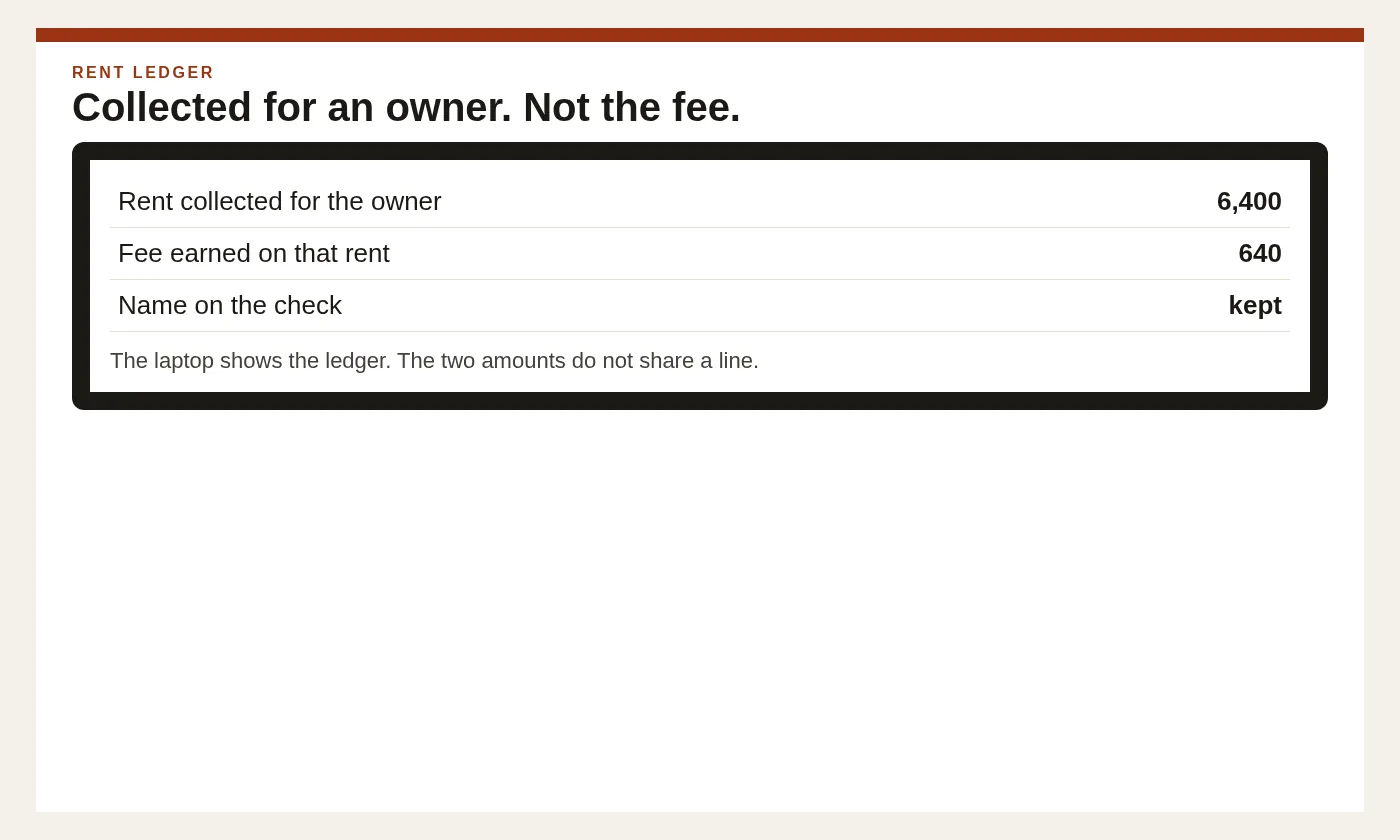
Rent collected for an owner is not the brokerage fee. January still needs the name on the check, and a coordinator is a different form from the rent.
Separate the rentRents you pay in a trade or business are reported on Form 1099-MISC. That is a different form from the one used for a person who did work and was not on payroll. A transaction coordinator, or another contract worker, goes on Form 1099-NEC once the payments pass the line that form prints for the year. Gross proceeds paid to an attorney at a closing can belong on the 1099-MISC as well, and that line is not the attorney's fee.
None of those forms can be built in January from a bank download that only shows amounts. The file has to have kept the name all year. We look for checks and transfers with no name, and for rent that was netted against a bill so the gross never posted. You still confirm who was paid. The first look is the list of holes, not a finished form.
A family operation that manages a handful of houses will often let the deposit, the rent, and a repair reimbursement share one account because there are only so many hours. The books can still tell them apart. The deposit is a hold. The rent is income. The reimbursement is the return of a cost you fronted, not a second rent.
When you collect rent for an owner, the gross is not your fee. Your fee is the part the management agreement says you earned. The rest is cash you are passing on. A file that calls the whole check income will overstate the year, and a file that calls the whole check a liability will hide the fee. Both mistakes show up when the owner asks for a simple statement and the profit and loss cannot produce it.
We want the owner named, the property named in the file even if the public note leaves the address off, and the fee posted on its own line. A chart copied from a generic company will call too many things rent. We rename the lines in ordinary words. Guest stay. Lease rent. Deposit held. Fee earned. Referral still owed. The person who owns the houses should recognize each line on that profit and loss from the month they just lived.
If you pay the owner by a transfer that nets your fee first, the gross still has to exist in the file. The net is a finding. The month itself is a longer story than that net figure. The same habit that hides an agent on a closing will hide a fee on a rent check, and January will ask for both.
Same close day. Same reconciliation. Same place where a name is stored when money leaves. Nothing about that requires a dramatic software project. It requires the next month to look like the cleaned one. Send a rent check you cannot tie to a person, or a coordinator payment you are not sure how to report. Say the year. We will not put a figure of tax on a web form. We will say what the file is missing so the form can be prepared from records instead of from memory.
The call is on video, the file is shared, and the hour is on the calendar. We do not claim a room in the town where the houses sit. The close day is the day the scope names.
Once the names are in the file, the Tax CFO question is whether you should still be the one collecting. Some owners want the fee and the hassle. Some want the fee without holding the cash. The books can support either choice. They cannot support a choice you have not made, because the unnamed check will keep arriving.
Start with the check that has no name on it. Bring the amount and the year, not the tenant's story.

You will be talking to the Steven Palmieri practice.